Halftime for the Age of Heroes

Kobe is gone. When I saw the news, my mind went blank. I checked and rechecked before I could believe it. Life is unpredictable — in my last blog post, I had just used a plane crash as an example to illustrate the probabilities behind so-called “fate.” But I was thinking of the Iranian passenger jet that had recently gone down, not Kobe.
R.I.P.
I was never really a Kobe fan, nor a Kobe hater. When I was watching basketball, he wasn’t among my favorite players. The Lakers’ purple-and-gold dynasty was too “stacked,” and Kobe himself was a polarizing figure — flashy but solitary on the court. To me he seemed like a privileged kid who could do whatever he pleased because of the resources behind him. There’s a saying that the things people truly admire are projections of themselves. I came from an ordinary family, so naturally I felt little affinity for that kind of star.
But Kobe did leave his mark on me. There was a basketball reality show back then called Kobe’s Protégés. I’ve long forgotten the specifics, but a few blurred images remain:
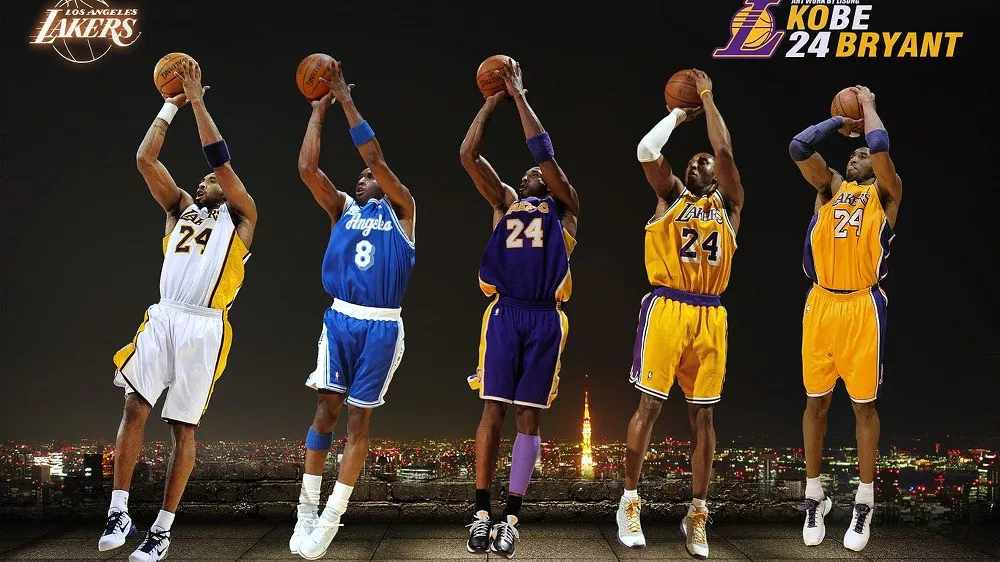
Kobe sitting in a hoodie, his eyes fierce — almost angry — staring straight at you from beneath the shadow of his hood. A basketball court at night, washed in harsh white light, balls scattered everywhere on the floor. Kobe shooting without pause — from the baseline, to the 45-degree wing, to the top of the key. The ball swishing through the net again and again, yet he kept going. Again. And again.
And then there were the famous lines: “4 AM in Los Angeles,” “Second place is just the first loser.” In my moments of doubt, Kobe genuinely inspired me. He was that formidable.
The NBA’s Constellation of Stars
Because of the epidemic, I’ve been stuck at home lately. My only outings have been driving aimlessly around the city. Nanchang is developing fast — every year I come home to new high-rises and shopping centers springing up. But the neighborhood where I grew up seems untouched. Even the breakfast shop downstairs is the same one. They seem trapped in a fold of time.
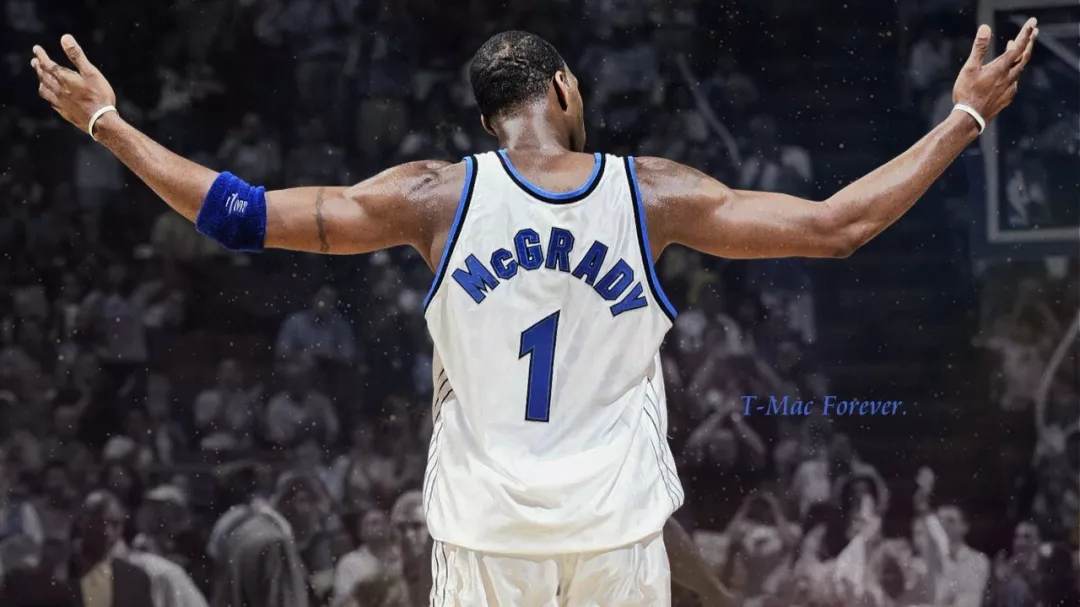
I haven’t watched the NBA in years. The news about Kobe yanked me back into those memories. I started watching in 2007, an era when the stars were blazing. The legendary ‘96 draft class was in its prime, and the ‘03 class had already emerged. Every team had its franchise player: the Black Mamba Kobe, T-Mac and his 13 points in 35 seconds, Vince Carter defying gravity, the Big Ticket Kevin Garnett, Ray Allen the Gentleman, the young King LeBron James, Dirk Nowitzki the German Wunderkind, Tim Duncan the Big Fundamental… It was like the early chapters of Romance of the Three Kingdoms — every faction had its own master, and the spectacle was magnificent.
I remember an essay by Zhang Jiawei called “Two Unfinished Fairy Tales” that moved me deeply.
The “fairy tales” were about Vince Carter and Allen Iverson. Carter, a gifted small-town kid, kept honing new skills to compensate for his weaknesses, evolving from a human highlight reel into an all-around player. Iverson, standing just six feet tall, led his underdog 76ers to upset Kobe and Shaq’s dream-team Lakers in Game 1 of the 2001 Finals — even crossing over a defender so thoroughly the man fell down, then stepping over him without breaking stride.
But those stories weren’t all about triumph. Turn the page: Carter was grounded by injuries and never flew again. Iverson blazed like a summer flower then wilted, losing the series 1–4. T-Mac and his 13-in-35 miracle faded into endorsing children’s English programs in China. The most poignant story belongs to Kevin Garnett. When he was traded back to his original team, the Minnesota Timberwolves, a once-wild fan who used to do a striptease at games had become a potbellied middle-aged man. But when the music started, the man broke into his old dance again, and the arena erupted.
“Jiggly Boy” Returns…and KG Approves - Funny video 2015
The video is deeply moving. Highly recommended.
That was an era of brilliant stars, each player unmistakably distinct, the court never short of stories.
The Age of Heroes
Today’s NBA no longer seems to work that way. The last game I watched was the tech-powered Golden State Warriors winning the championship. Reportedly they used AI to devise tactics, optimize players’ movements, and calibrate every meal down to the gram of protein, carbs, and fat.
No more heroism. No more miraculous 13-point comebacks in 35 seconds. No more stories like Kobe spending a summer apprenticing under Hakeem Olajuwon to learn post footwork. No more 4 AM in Los Angeles — AI would mandate precisely 8 hours, 23 minutes, and 17 seconds of sleep[1].
This kind of NBA feels a little boring.
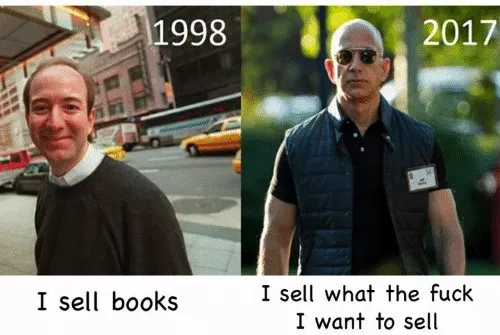
But it seems every industry follows the same script. The early internet was no different — full of heroes and legends: Jobs traveled through India at 17 and built the first Apple computer in a garage at 21. Bill Gates wrote Altair BASIC in five days. Bezos started out selling only books. Larry Page and Sergey Brin launched Google’s legend with a single PageRank paper. Zuckerberg built “the Facebook” in his dorm room. Satoshi Nakamoto’s true identity remains unknown to this day…
The person I admire most is Aaron Swartz[2]. At 13 he co-authored the RSS specification (a technology I deeply value), and became a key contributor to Markdown (another technology I revere — this very post is written in a Markdown editor). Later, he took on the entire academic publishing industry single-handedly, and was tragically lost.
Even religion follows this pattern. Before monotheism, the gods of Greek and Norse mythology were distinct personalities with mortal troubles: Prometheus stealing fire, Sisyphus pushing his boulder — each unforgettable. Eventually they were all supplanted by a single solemn, supreme, omniscient, omnipotent God.
China’s internet follows the same narrative arc. Wang Xing declared that the first half of the internet was over. And so we watched countless small entrepreneurs struggle for survival — absorbed into tech giants, or simply dying off. The industry entered an era of titans battling titans. The grassroots players couldn’t even afford a ticket to watch.
The ROI Era
After the first half ended, the internet industry rapidly evolved into the ROI era.
DAU, time-per-user, PV, VV; AdLoad, CTR, CVR, CPA…
Every behavior is tracked. Everything can be quantified. Everything has an ROI. Everything is business. The internet has been reduced to a simple formula: Growth -> Retention -> Monetization. And companies like ByteDance have taken it to its logical extreme: User Growth handles acquisition, Product & Engineering handles retention, Commercialization handles monetization — supported by various middle platforms and back-end systems. Replicate the same logic across every vertical within reach, and a hundred-billion-dollar company that even Tencent struggles to counter is born.
The joy of an ROI company is just that simple — and that tedious.
Silicon Valley, birthplace of the internet, isn’t doing much better. Apple, under pressure from the FBI, abandoned end-to-end encryption for iCloud. Microsoft, led by an Indian CEO, found its second wind — but the former ruler of the personal PC is now a SaaS company. Google removed “Don’t be evil” from its values and incubated a censored search engine for the Chinese market. Bezos started using AI to measure employee productivity and AI to fire them. Facebook, mired in privacy scandals, looked to learn from WeChat’s playbook on private messaging. The only thing still carrying a creed might be Bitcoin — but blockchain degenerated into a mass harvesting machine, with the likes of Justin Sun already infamous.
Looking at NBA players’ rigorously calculated meal plans, I found myself confused. I couldn’t tell: Was the NBA always like this, and I simply grew up and understood what I hadn’t before? Or did the NBA itself grow up — from a boy with romantic dreams into a calculating corporate manager?

I also couldn’t tell: Where did those digital-utopian ideals go? Is the principle of letting information flow freely still held in any regard? Was Information Democracy nothing more than a fleeting illusion?
Zweig and the Lost Old World
Lately, life keeps connecting things in unexpected ways.
Last night I rewatched The Grand Budapest Hotel, a film that mourns an old world. This time I watched carefully, and noticed something I’d missed before: after the credits, the director acknowledged that the story was inspired by the works of Stefan Zweig.

Last week a friend said that if Zweig were to write The Tide of Fortune today, Elon Musk would surely be in it. I wasn’t so sure. Zweig wrote about the luminaries of the old world. Nearly all of his work is an elegy for that vanished era, just dressed in different costumes. Musk belongs to the future.
Coda
I originally wanted to title this piece “The Passing of the Age of Heroes.” But by this point I’ve changed my mind. After all, there’s still Elon Musk. Who says this era lacks heroes? Didn’t countless heroes and legends emerge after Zweig’s time?
So yes — the internet may have entered its second half. But for the Age of Heroes, this is likely just halftime. The curtain has not fallen. The second half will probably be even more spectacular.

- A number I made up, to illustrate the extent of AI’s control
- Highly recommend the documentary The Internet’s Own Boy
2020-01-18 @Nanchang