Notes from Nagasaki
I wrote this in 2024 and didn’t publish it until nearly a year later. Terrible procrastination.
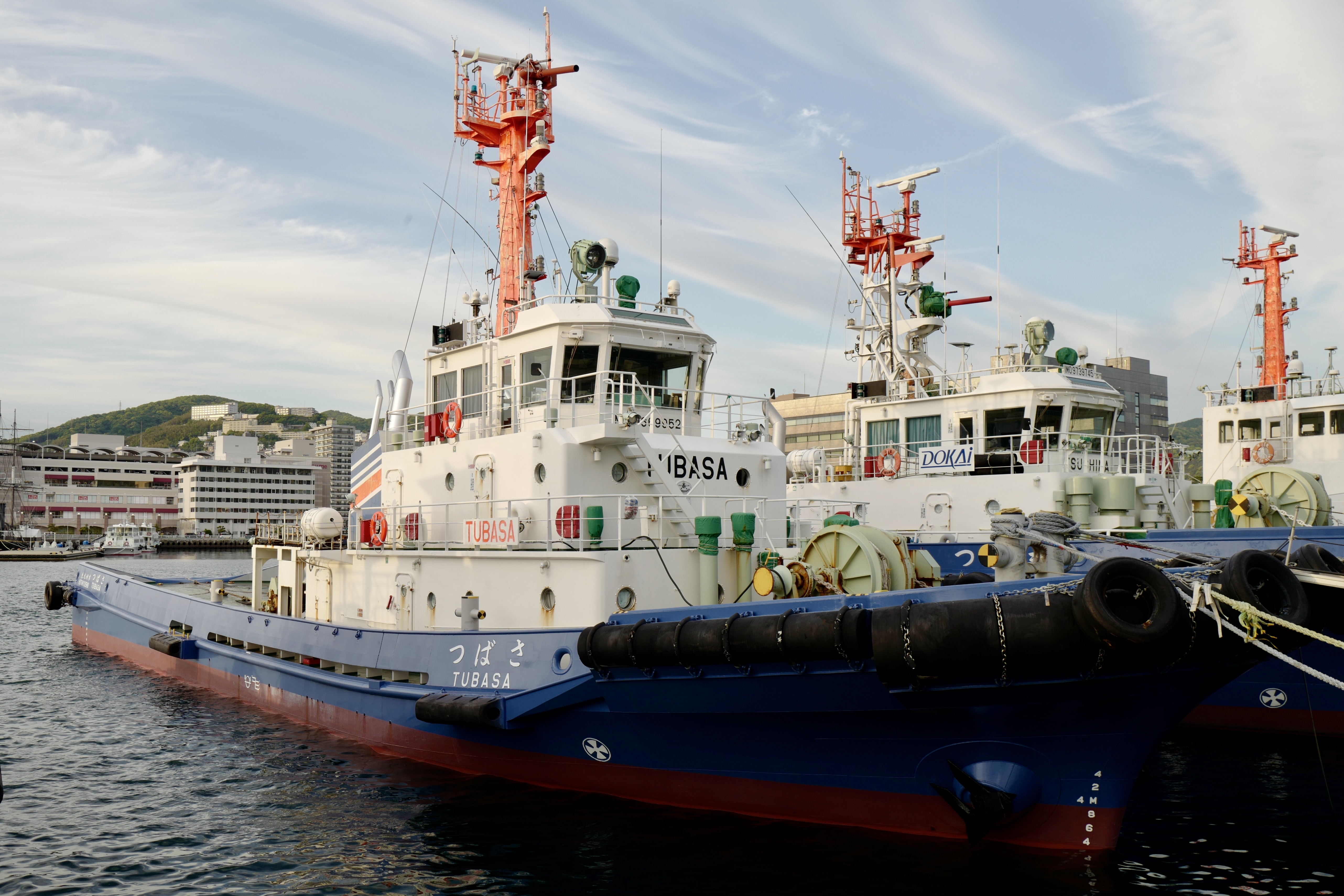
I visited Kyushu during the May Day holiday in 2024, primarily to see a concert by Li Ronghao.
I flew from Shanghai to Fukuoka, then returned to Shanghai from Nagasaki. Of all the places I visited, Nagasaki was my favorite — a remarkably quiet seaside town. I also took the opportunity to study some modern Japanese history.
The History of Nagasaki
The history of Nagasaki begins, as so many Japanese stories do, with Nobunaga’s Ambition.
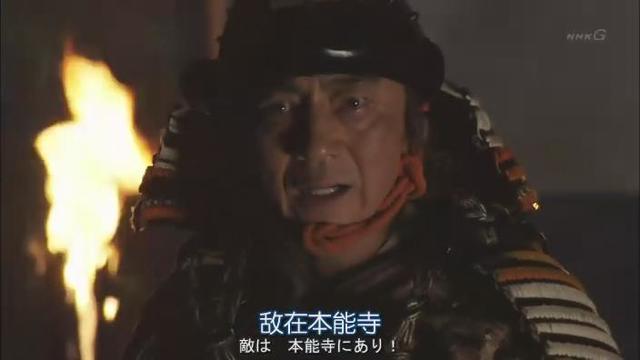
Oda Nobunaga was a daimyo in the late Sengoku period who, through military conquest and political maneuvering, came close to unifying all of Japan. In 1582, however, he was betrayed by his retainer Akechi Mitsuhide at Honnō-ji temple in Kyoto and killed in the ensuing battle. This is the origin of the famous phrase “The enemy is at Honnō-ji.”
Another of Nobunaga’s retainers, Toyotomi Hideyoshi, moved swiftly to defeat Mitsuhide and seized Nobunaga’s mantle, eventually becoming the de facto ruler of Japan.
After Hideyoshi’s death, Tokugawa Ieyasu exploited the youth of Hideyoshi’s heir to consolidate power. His decisive victory at the Battle of Sekigahara in 1600 over daimyo loyal to the Toyotomi clan gave him control of the country. He established the Tokugawa shogunate, ushering in the Edo period.
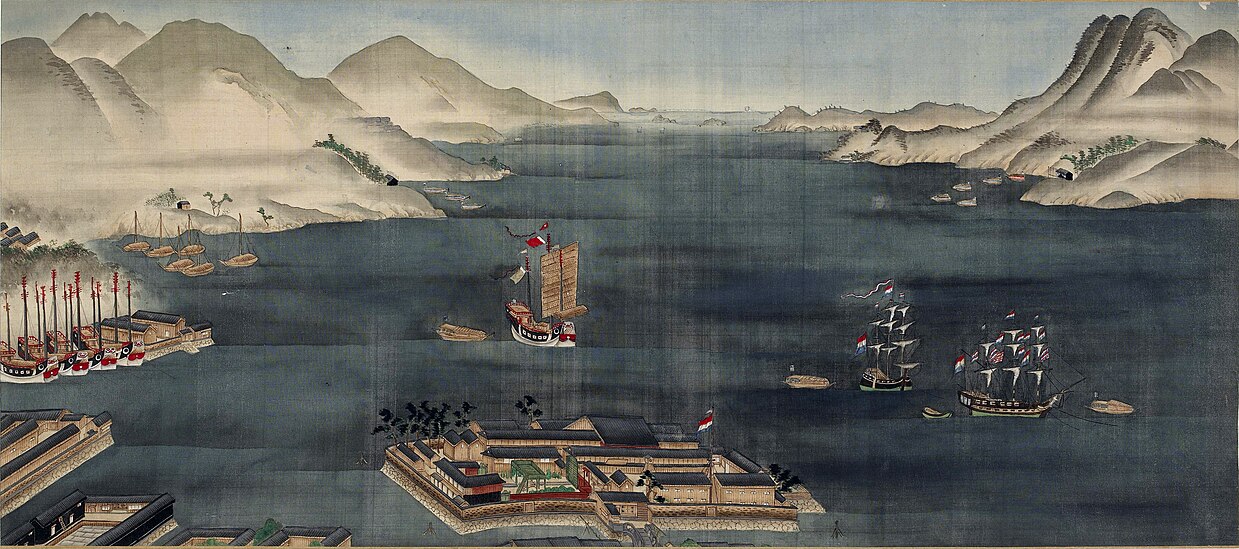
Nagasaki’s story proper begins in 1570, when it was first established as a trading port with the Portuguese, who brought commerce and Christianity in equal measure. By 1633, the Tokugawa shogunate — following the precedent of China’s isolationist policies — imposed its own sakoku (closed country) edicts, making Nagasaki Japan’s sole point of foreign trade. In 1853, Commodore Perry sailed his fleet into Edo Bay, and the resulting Treaty of Kanagawa cracked the isolation wide open. The 1858 Ansei Treaties forced Japan to open further, ending Nagasaki’s trade monopoly for good. For nearly three centuries, Nagasaki had been Japan’s only window to the outside world. Think of what Hong Kong once meant, and you begin to grasp the significance.
“Good times don’t last forever; you can’t only climb up the ladder.” In 1868, the armies of Satsuma domain (also in Kyushu) and Chōshū domain, equipped with modern weapons, defeated the shogunate’s forces despite being outnumbered, establishing a new government centered on the Emperor. The Meiji Restoration had begun.
Meanwhile, the Qing dynasty…
The Atomic Bomb
Nagasaki is the second — and, as of 2024, the last — city on Earth to have been struck by an atomic bomb.
As it happens, the other city hit by an atomic bomb is also in Japan. So why did Japan get bombed twice? That story, too, traces back to the Meiji Restoration.
After the Restoration, Japan pursued wholesale Westernization and progressed at extraordinary speed, far outpacing the Qing dynasty’s half-hearted “Chinese learning as substance, Western learning for application” approach. In 1895, Japan defeated the Qing in the First Sino-Japanese War. A nation long dismissed as barbarians had suddenly risen — and more crucially, had extracted war indemnities worth 6.4 times Japan’s entire annual fiscal revenue. Japan poured this into education and military expansion, projecting power across the Korean Peninsula and rivaling Imperial Russia. In 1905, at the Battle of Tsushima, Japan annihilated Russia’s Second Pacific Fleet and captured its commander, securing unchallenged naval supremacy. The victory cemented Japanese control over Korea.
There is nothing more dangerous than a gambler on a winning streak. Two victories over neighboring empires inflated Japan’s ambitions, and decades of extreme nationalist education had embedded militarism deep in the national psyche. The entire country was swept along. In 1937, Japan launched a full-scale invasion of China, expecting a quick capitulation from the Republic of China government, followed by a campaign of self-sustaining conquest to build the so-called Greater East Asia Co-Prosperity Sphere. They gravely underestimated Chinese resistance. In 1941, the United States imposed an oil embargo on Japan. Even Prime Minister Konoe Fumimaro, himself a far-right figure, understood that war with America meant certain defeat. But the nation had long since been forged into a war machine, and so the most extreme of them all — Tōjō Hideki — took power and ordered the attack on Pearl Harbor, igniting the Pacific War. As Japan suffered defeat after defeat in the Pacific, the domestic propaganda apparatus reported only victories, leaving the Japanese public genuinely bewildered: if we’re crushing the Americans, why haven’t they surrendered?
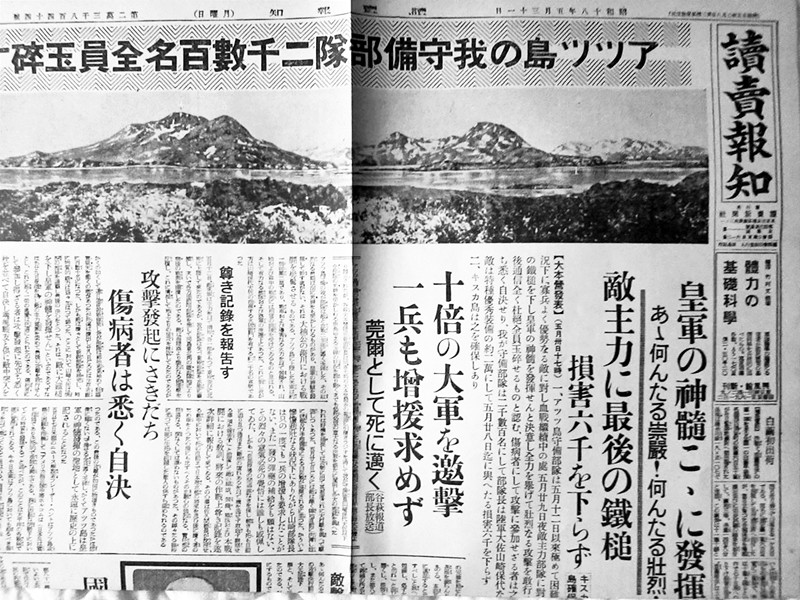
On July 26, 1945, Allied leaders issued the Potsdam Declaration, setting terms for Japan’s surrender. Emperor Hirohito did not respond. The militarist government mobilized the populace under the slogan “Ichioku Gyokusai” — one hundred million shattered jewels — calling on women and children to resist with bamboo spears. On August 6, 1945, the first atomic bomb detonated over Hiroshima. Hirohito still did not respond. Internally, the government suppressed the news, claiming it was a “meteorite strike.”
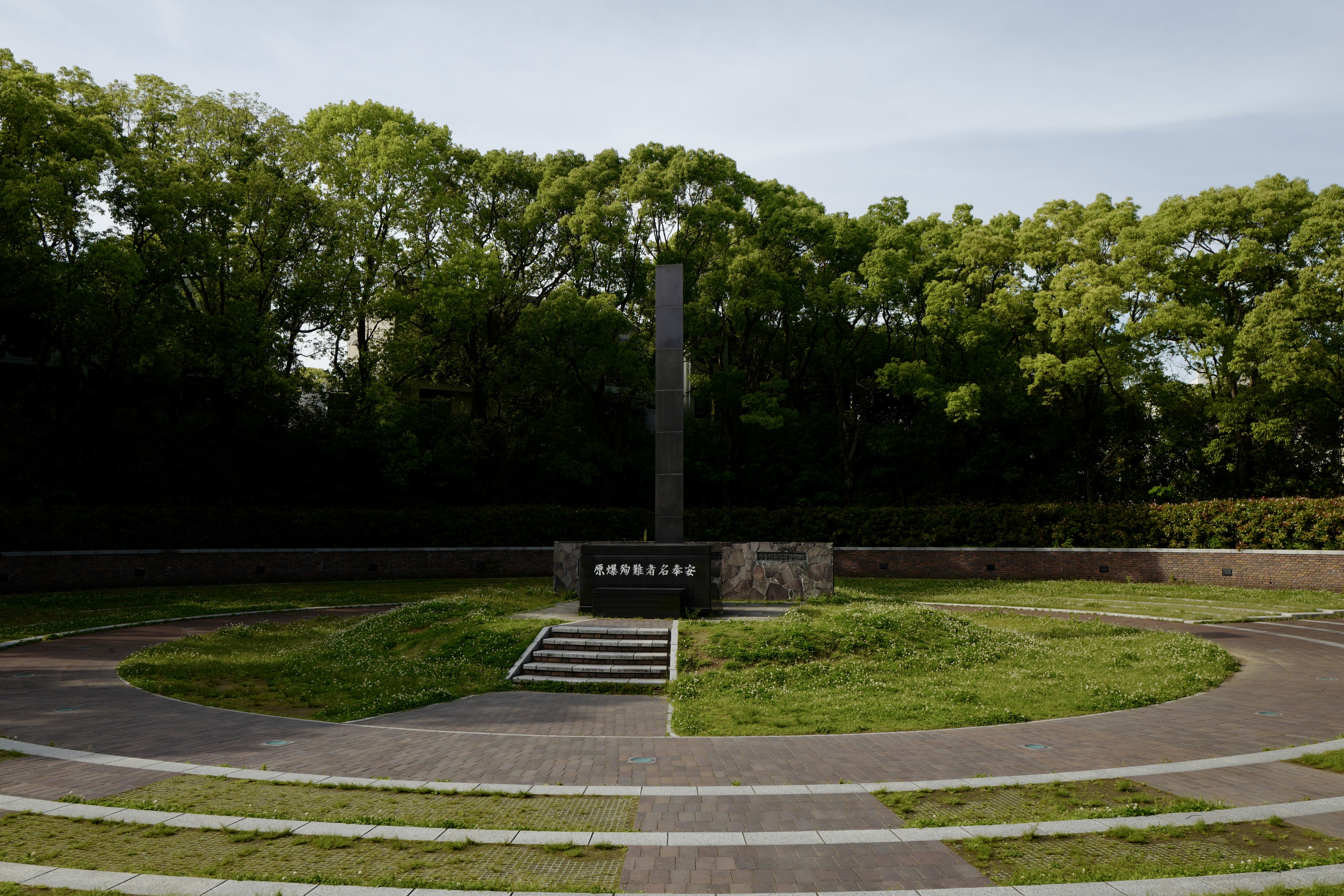
On August 9, 1945, the second atomic bomb exploded over Nagasaki. The detonation point was in the northern part of the city, just 500 meters from Urakami Cathedral, then the largest Catholic church in East Asia. Many parishioners were attending Mass at the time, celebrating the Feast of the Assumption. Everything within 1.6 kilometers of ground zero was completely destroyed. An estimated 40,000 to 75,000 people died instantly. Nagasaki’s predominantly wooden buildings fed a massive firestorm.
On August 15, 1945, Japan surrendered unconditionally. Even then, many Japanese citizens reacted with shock: “We were prepared to fight to the death — why did His Majesty surrender first?”
The Post-Bomb Era
Upon arriving in Nagasaki, I went straight to the Atomic Bomb Museum.
Nagasaki is a city of hills, and the museum sits atop one of them. I dragged my suitcase up the slope. The museum was uncrowded and charged a modest admission. The main exhibits detailed the day of the bombing and the suffering of its victims. There was also a section chronicling Japan’s aggression against other nations — thorough in its account, but tucked away in a corner, largely ignored by visitors.
I think the story of the atomic bombings is told far too briefly and superficially in China. It’s as if the bombs fell, Japan surrendered, and the war ended — a deus ex machina. How did Japan rise in the first place? While Japan was ascending, what were the Qing, the Republic, and the Western powers doing? How were Japan’s decisions to invade and wage war actually made? What roles did the Emperor, the elder statesmen, the cabinet, the military, and the public each play? Why did Japan surrender? What domestic and international forces shaped the process? Perhaps it’s my own ignorance, but I never learned the answers to these questions — not in high school, not in college. Perhaps it’s because the frontal war effort wasn’t fought by the party currently in power.
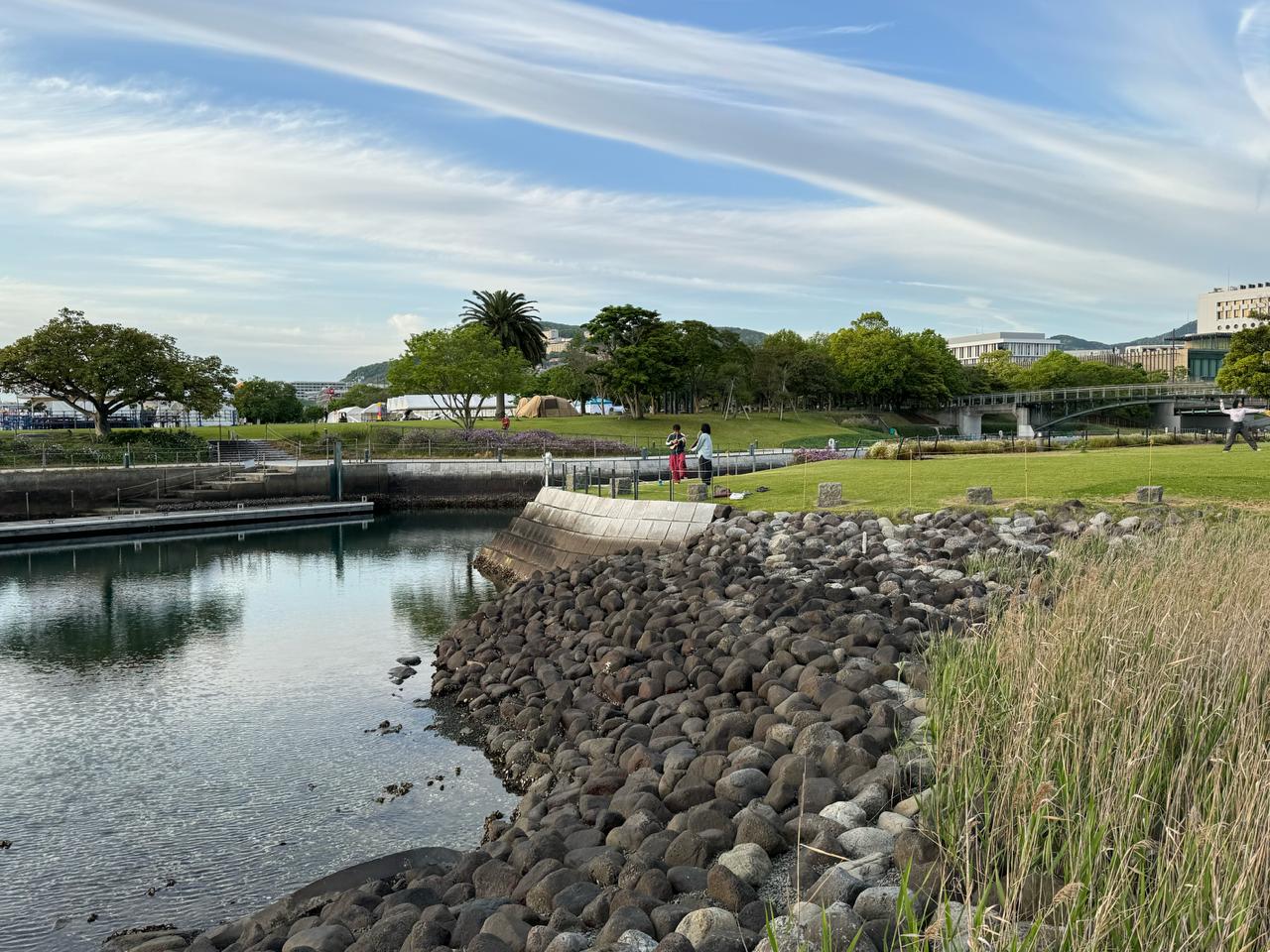
On another note, popular perception of an atomic bomb’s destructive power seems somewhat at odds with reality. When people think of nuclear detonation, they imagine permanently contaminated land — likely by association with Chernobyl. The actual ground zero of the Nagasaki bomb, once the site of a church, is now a quiet memorial park, with residential neighborhoods just steps away. Nagasaki underwent thorough postwar reconstruction, which may be why the city struck me as remarkably livable — rational road planning, elegant little parks along the waterfront.
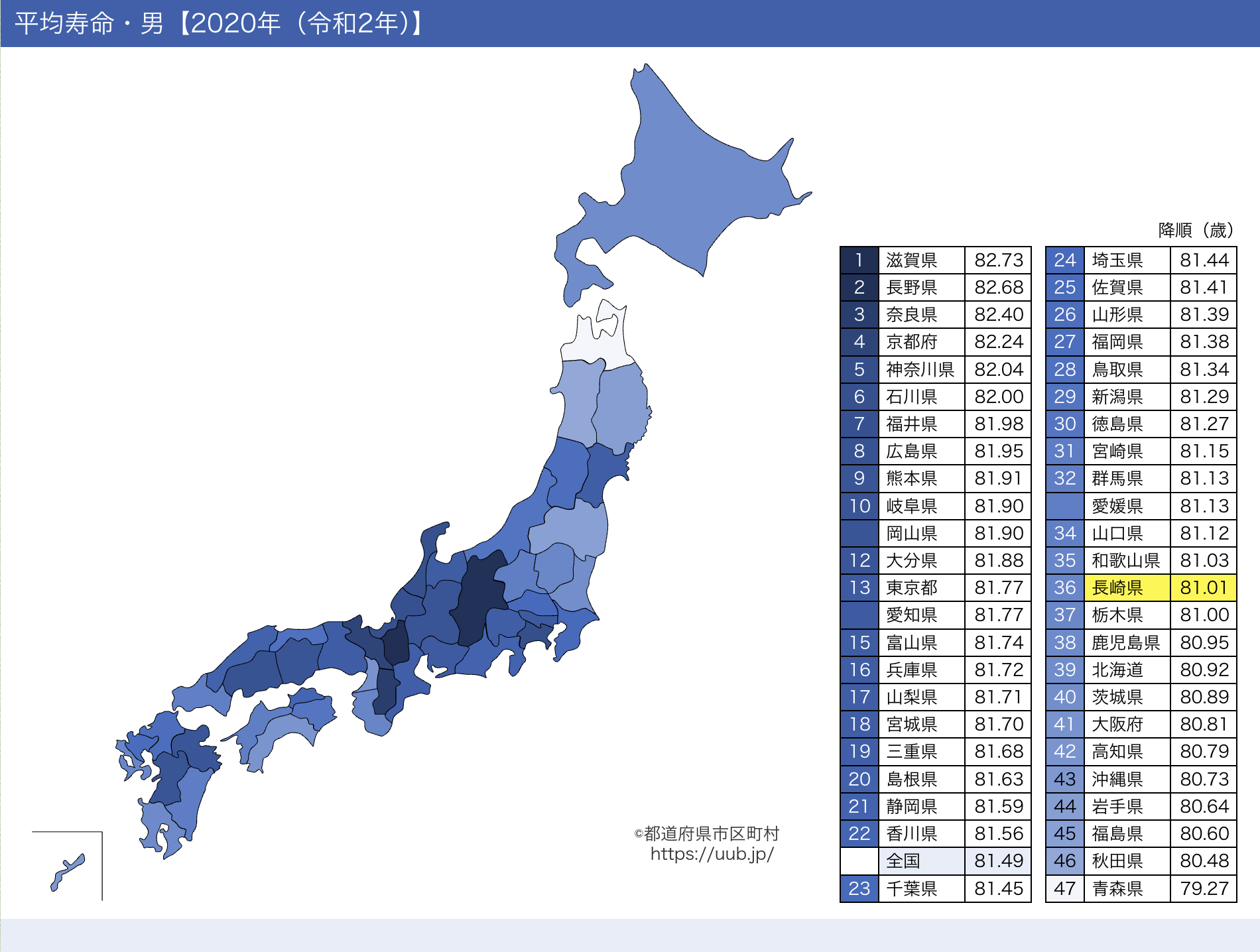
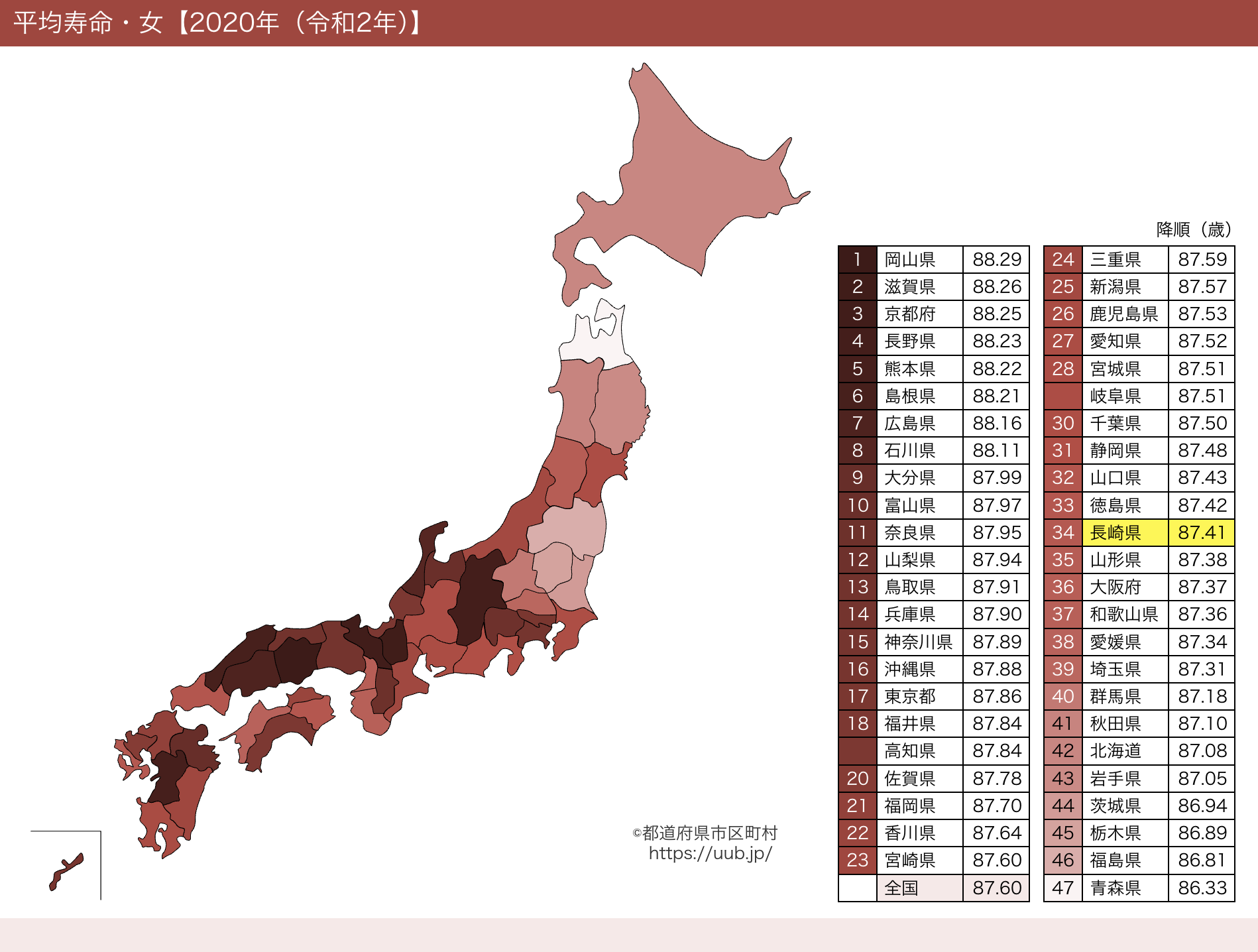
I looked up Nagasaki’s life expectancy: 81.0 years for men, 87.4 years for women. Below Japan’s national average, but still comparable to Shanghai (81.7 / 86.5). Eighty years after the bombing, radiation has returned to normal levels and has no measurable impact on residents’ longevity.
One plausible explanation is that the Americans and the Japanese colluded to exaggerate the impact of the atomic bombings — the Americans wanted to tout their newly forged superweapon, and the Japanese wanted to garner more sympathy. The Little Boy bomb dropped on Hiroshima had an explosive yield of roughly 15,000 tons of TNT; the Nagasaki bomb, about 20,000 tons. Modern strategic nuclear weapons are in the range of 500,000 tons. The explosive force of Chernobyl is difficult to quantify, but its radiation release is estimated at 400 times that of Hiroshima — a catastrophe of purely human making.
A more speculative, perhaps conspiratorial explanation — one I’ve arrived at on my own — is that the core deterrent value of nuclear weapons is aimed at rulers, not populations. Imagine two nations at war. In conventional warfare, each side’s leaders mobilize domestically and internationally, matching national strength against national strength, easily devolving into attrition (as in Russia’s ongoing invasion of Ukraine). But with nuclear weapons, Nation A can target locations where Nation B’s leadership might be — a decapitation strike. How do you fight a war under those conditions? Even with missile defense, launch ten warheads and only one needs to get through for the decapitation to succeed. Rulers therefore have every incentive to amplify the perceived destructive power of nuclear weapons, binding the fate of the populace to their own — mutual destruction. They even claim nuclear weapons could destroy the Earth itself. The Earth has existed for billions of years; it is not afraid of these little primates. Nuclear weapons can only destroy humanity. Give it a few hundred million years, and the Earth will nurture new intelligent species all the same.
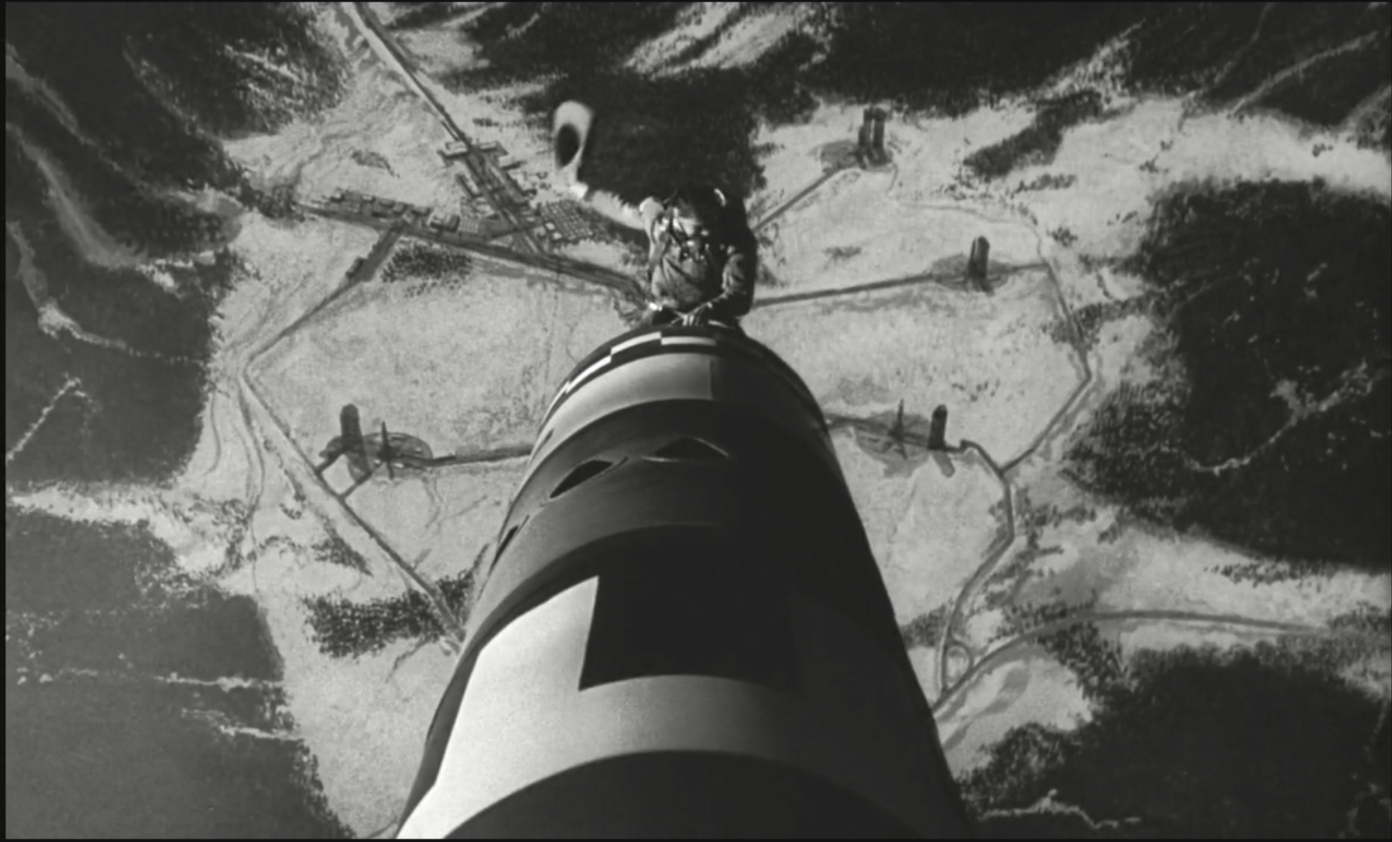
The irony is that nuclear weapons have indeed brought humanity a more enduring peace. Liu Cixin’s Deterrence Era is likely a mirror of our reality — humanity, in fact, lives under the shadow of annihilation. The five permanent members of the UN Security Council possess enough nuclear weapons to destroy human civilization several times over. Power of this magnitude should be held by responsible authorities. But responsible power cannot be guaranteed by any individual — it must be guaranteed by robust, iterative institutions. Japan’s militarist government, which whipped up populist frenzy, is the perfect counterexample.
The people of Qin had no time to mourn themselves, and so posterity mourned them.
But posterity mourned without learning from them,
and so caused yet another generation to mourn for posterity once more.
Yashida Ichirō
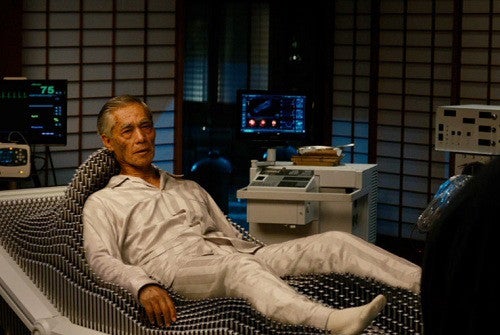
There is one more figure connected to Nagasaki: Yashida Ichirō, the main antagonist of The Wolverine. Originally a Japanese soldier, Yashida survived the Nagasaki bombing because Wolverine shielded him with his own body — and in doing so, witnessed Wolverine’s immortality firsthand.
This character has always stayed with me: an ordinary soldier who eventually became a corporate titan, even bankrolling technology capable of going toe-to-toe with Wolverine. And the origin of all of it may have been nothing more than having witnessed a miracle.
Because he saw, he believed.
I wonder how many parallel universes it would take to produce a Yashida like that — a true Atlas. And how lost and resigned all the other Yashidas across those universes must feel.
2024-06-04 @Shanghai